
Quiet Luxury On The West Coast: A Guide to Timeless Interiors Without The Clichés
Quiet luxury isn’t new, but it’s having a moment. While much of the design world races to define it, West Coast interiors — especially in Southern California — have long embodied its core values. These homes favor tonal restraint, natural materials, and spaces that feel curated but not performative. This style is often misunderstood as stark minimalism or beige maximalism, but in practice, it’s more nuanced. It’s about balance, not coastal cliché or desert minimalism.
Timeless West Coast design resists themes and matching sets. A sense of calm. A sense of clarity. A way of living that prioritizes proportion, material, and flow over decoration. If you’re designing a home or space meant to last and meant to feel, this is how to bring quiet luxury into a modern West Coast interior — without chasing trends or naming it out loud.
Let’s explore how to achieve that effortless, elevated editorial look — without making your home feel like a museum ☺
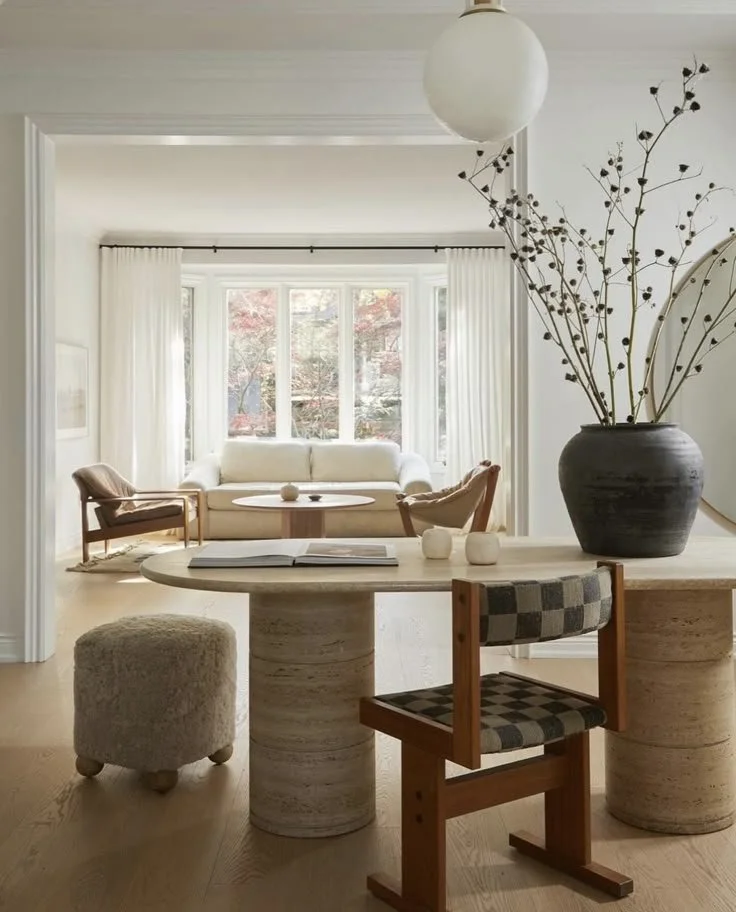
Image: via Pinterest
1. SCULPTURAL FORMS OVER STATEMENT PIECES
In a quiet luxury interior, the emphasis is on form. Furniture with clean curves or weighty lines holds presence without shouting. A curved linen chaise, a hand-carved coffee table, or a matte-finished floor lamp with architectural clarity can define a room far more than any accent wall. These pieces aren’t trendy — they’re architectural.
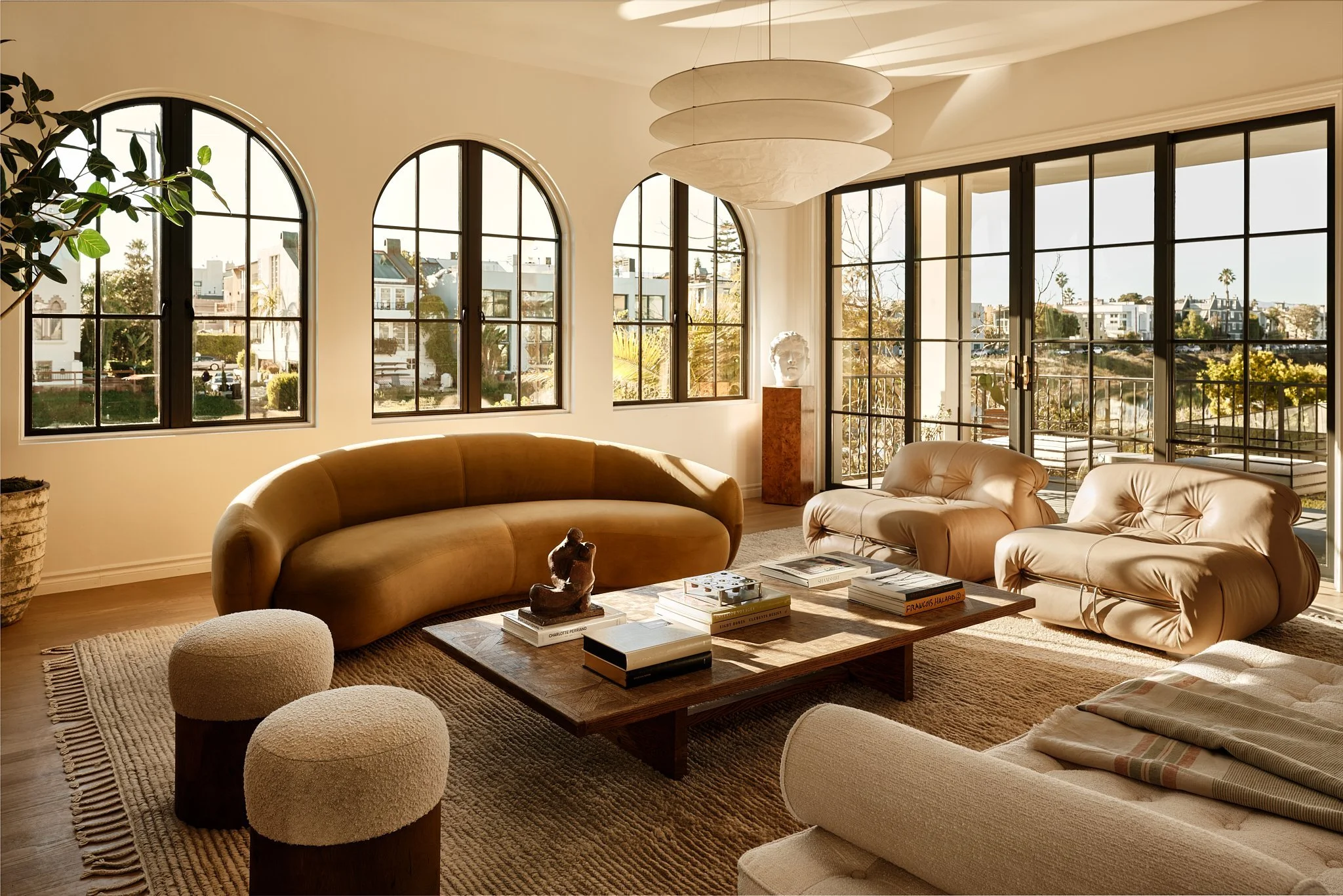
Design: Ome Dezin
Why It Works:
Sculptural furniture creates focal points without adding clutter. It holds space in a room through shape and material, not through color or pattern. Especially in open floor plans or modern California homes where minimalism can read flat without intentional design — these pieces act as grounding elements.
How To Implement At Home:
Swap a standard sectional for a curved sofa to introduce softness and flow into the room. The Expert Classic Curved Sofa is handcrafted in Los Angeles and pairs beautifully with natural plaster or limewashed walls.
Incorporate an oak console like Maiden Home’s ‘The Blank Console Table’ in an entryway or dining room to create an anchoring moment with clean lines and grain-forward texture. Or, introduce contrast through a sculptural dining chair or bench — something with unexpected geometry or exaggerated proportions, such as Christian Siriano dining chairs. Simple statements break up the visual rhythm.
Use sculptural lighting, such as the Noguchi Rice Paper Floor Lamp or Innes Floor Lamp, to add height and rhythm without visual noise. Audo Copenhagen Hashira Floor Lamp will add a quiet touch.
Designer Tips:
1. In open-concept spaces, use sculptural furniture to divide zones naturally — rather than relying on rugs or accent walls.
2. Statement pieces can be powerful tools in a quiet luxury interior, but they require careful balance. When combined with other bold forms or finishes, they can quickly shift a space away from restraint. To maintain clarity, let one expressive element take the lead and keep surrounding selections minimal and grounded.
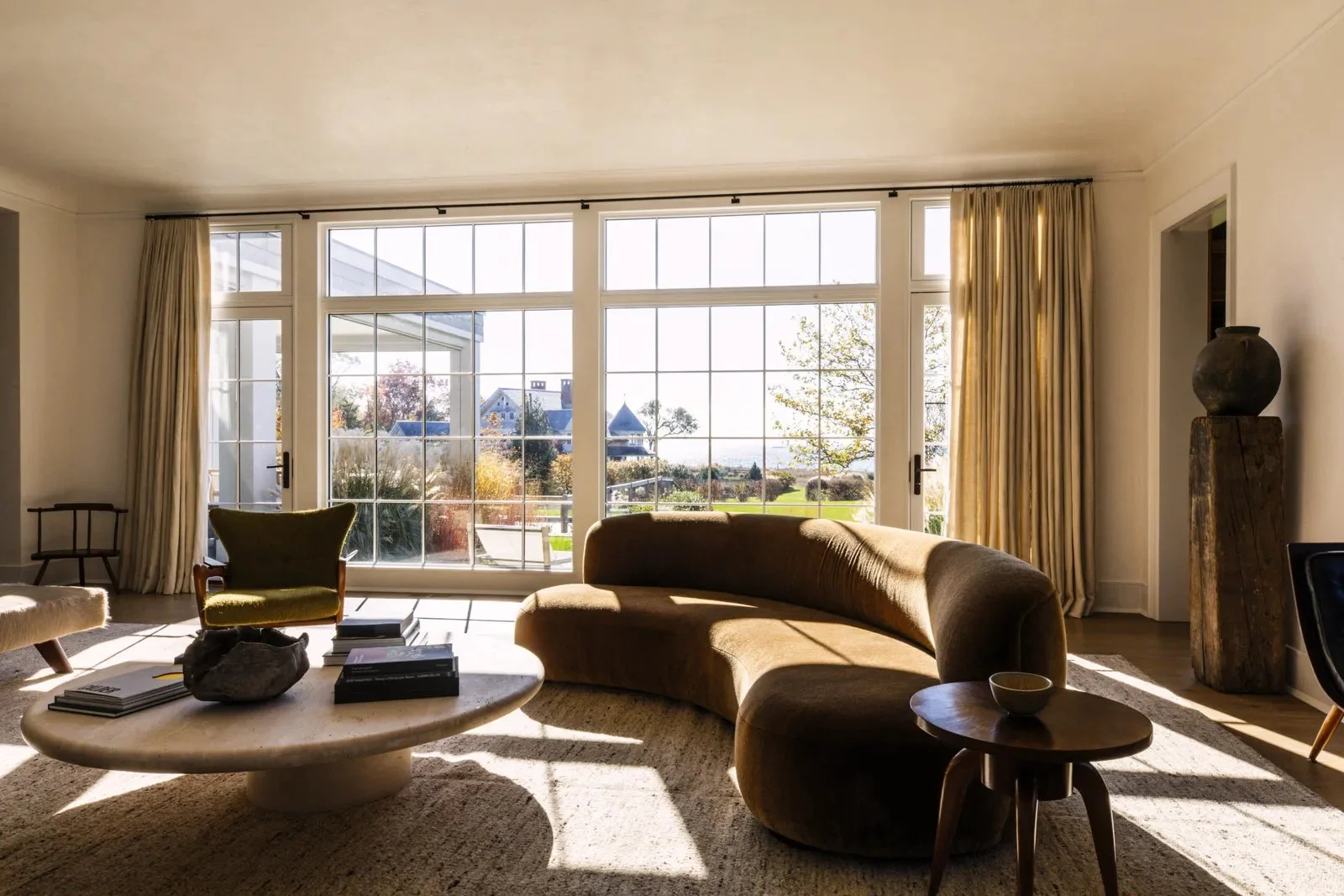
Design: Jake Arnold
2. USE NATURAL FINISHES WITH INTENTION
Natural materials are foundational to quiet luxury — but they must be edited. Materials should be celebrated, not overused. Wood, stone, linen, and limewash all belong, but they shouldn’t compete. Let one take the lead, and keep supporting finishes subdued.
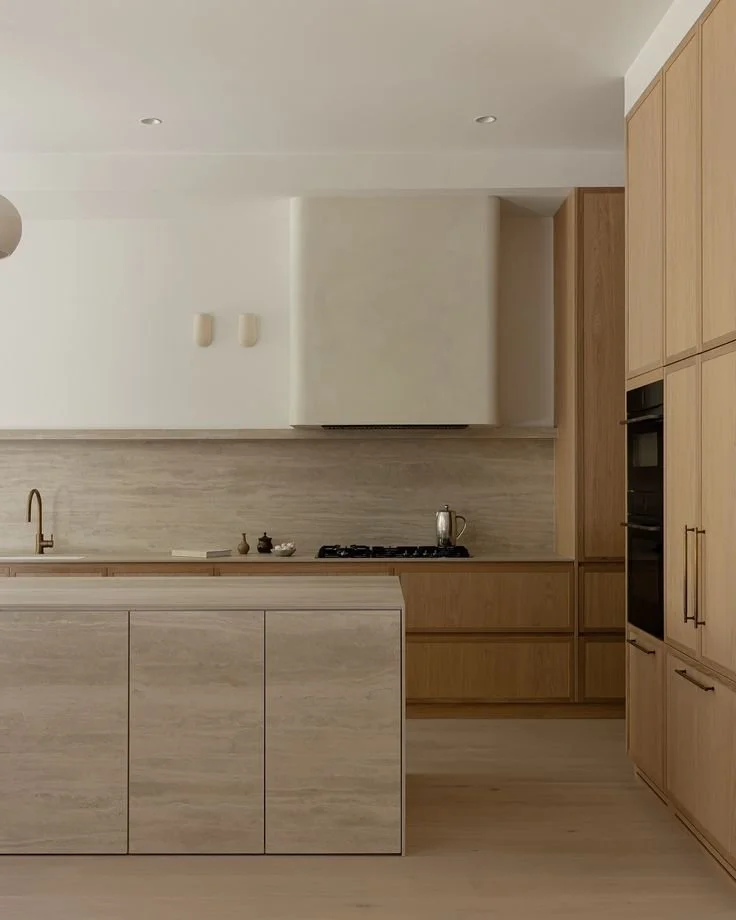
Design: Kate Lawrence Interiors
Why It Works:
A space grounded in one dominant natural material feels calm and connected. Over-layering different textures dilutes the effect. Instead, focused materiality—especially in tactile finishes — brings quiet impact.
How To Implement At Home:
In a bathroom or powder room, let a single surface dominate—like Ann Sacks’ Quartzite or Marble Slabs. Use it for the vanity wall, countertop, or even baseboards for a seamless, sculpted look.
Pair stone with softer, hand-applied finishes like Portola Paints Lime Wash in “Kingdom” or “Soapstone” to add visual movement and quiet contrast. [See our in-depth blog post on lime wash paint for pros, cons and application techniques.]
Complement natural finishes with clean-lined fixtures such as the Watermark Blue Collection in unlacquered brass, which will patina over time for a lived-in feel.
Designer Tips:
1. Let one material lead the space. If travertine, for instance, defines your bathroom, keep other elements quiet — rift-sawn white oak cabinetry with integrated pulls allows the stone to stand out without distraction.
2. When working with bold natural stones like quartzite or marble in kitchens or entryways, use them as grounding elements rather than showpieces. Surround them with matte finishes, soft fabrics, and architectural lighting to balance their natural depth without competing for attention.
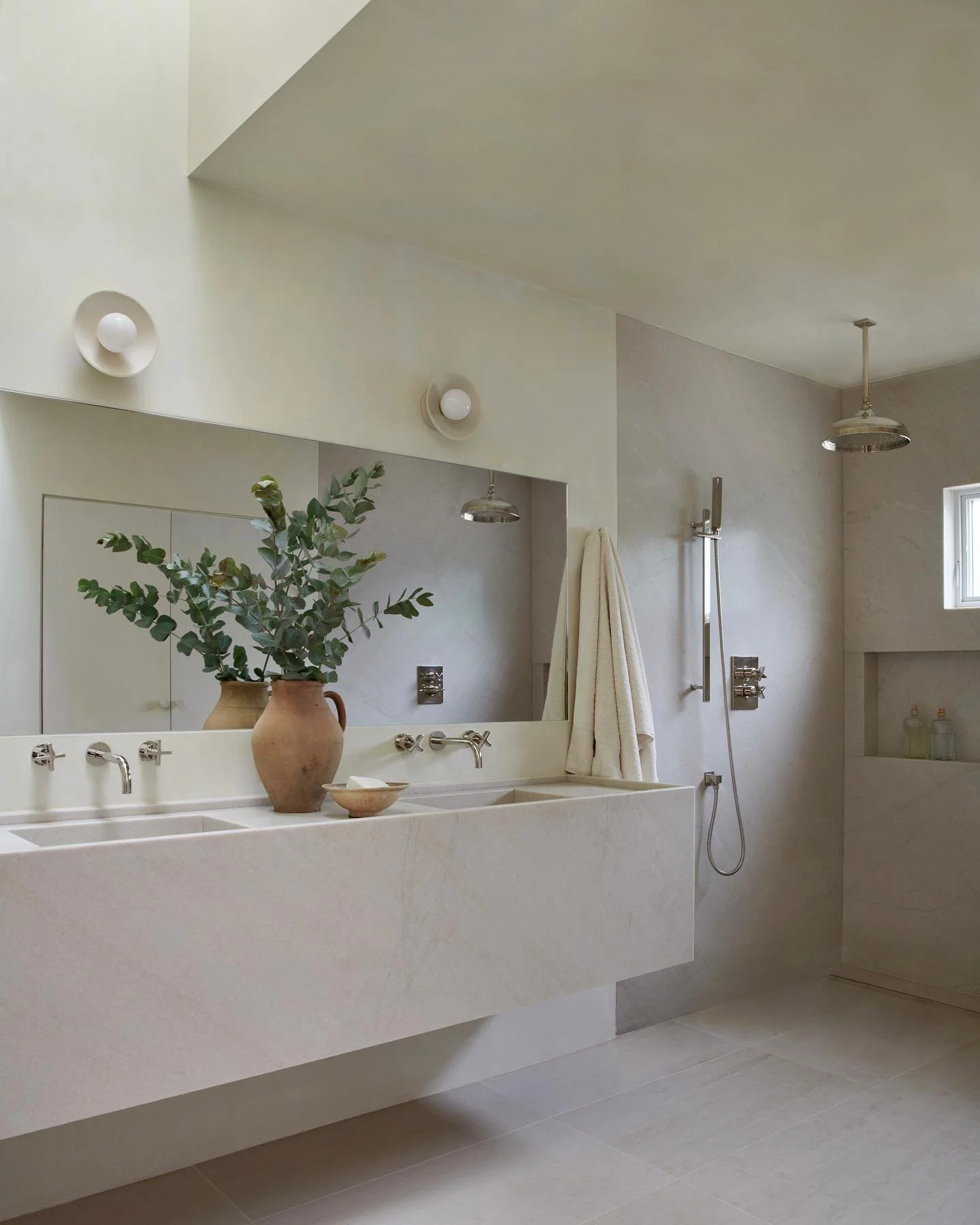
Image Credit: @tessaneustadt


3. LAYERED NEUTRALS WITH MEANING
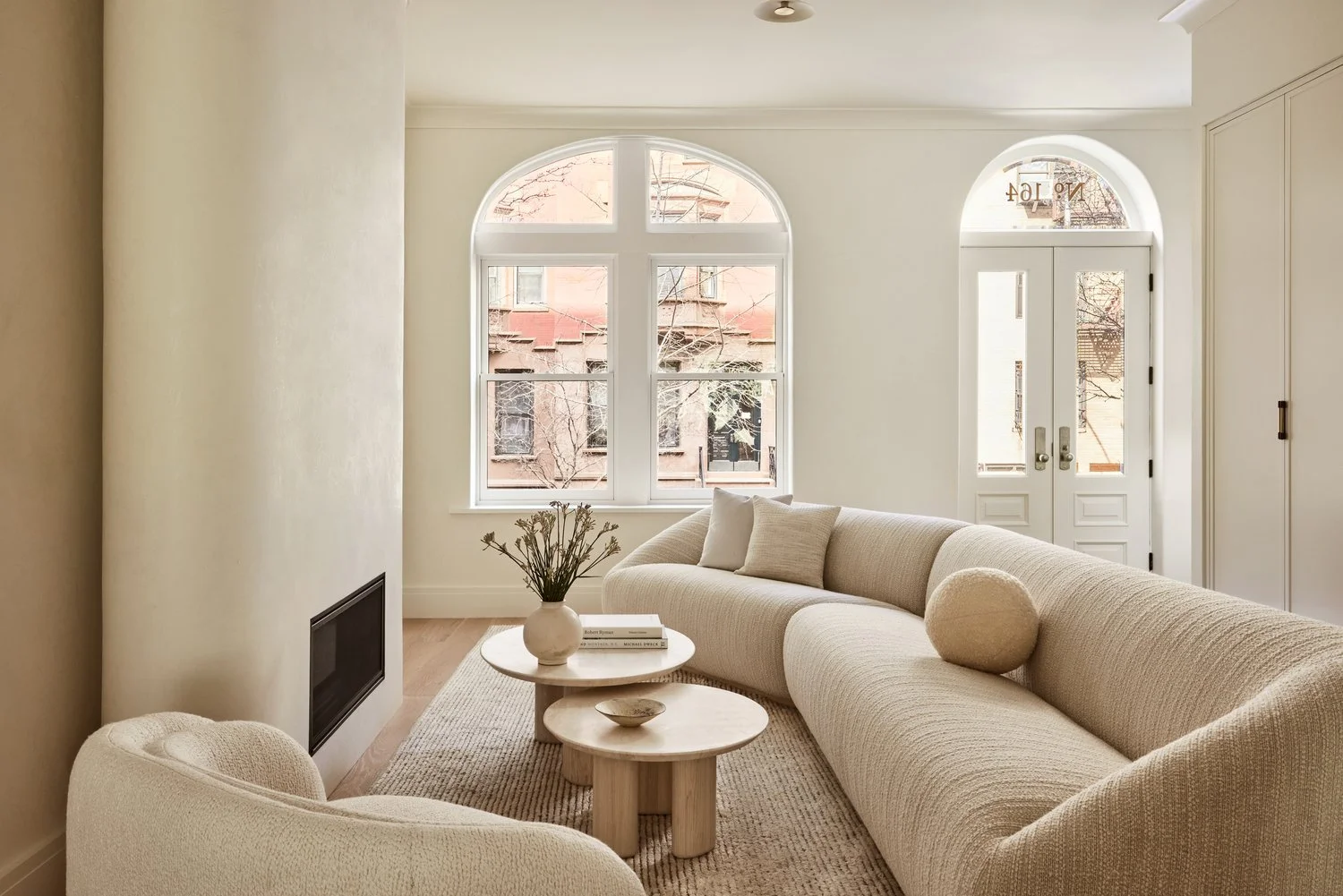
A quiet luxury palette is not beige and boring—it’s layered and intentional. Oat, bone, putty, ash, and ivory work together to create depth and softness. But success lies in mixing textures, not hues. These shades work best when offset by softness: wool rugs, linen drapery, handmade ceramics.
Design: Chango + Co.
Why It Works:
Neutrals allow materiality to stand out. When layered correctly, they create warmth and complexity without ever overwhelming the eye. They also highlight architectural features, rather than obscuring them.
How To Implement At Home:
Choose upholstery in high-end neutral textiles like Kvadrat’s Hallingdal 65 Wool, which adds both tactile richness and structure to custom seating or built-in banquettes (this one is great for high-traffic areas or commercial projects). Or, an elevated look with clean-ability, James Dunlop Sultan by Zepel FibreGuard Pro or Kravet Performance Fabrics are perfect examples. Additional favorite fabric go-to’s are Zak + Fox or Rebecca Atwood.
Pair neutral drapery with the gentle weight and texture of Dedar’s “Karandash”, which reads as refined but understated.
Soften a modern shell with Everhem’s Custom Linen Drapery, especially in spaces with large windows or strong sunlight—common in San Diego coastal homes. Two Pages Curtains offers a luxe look at a more budget-friendly price.
Designer Tip:
Neutrals should vary in sheen, density, and scale. Mix open-weave linen with dense wool, matte plaster with glazed ceramic, and smooth stone with textured paint. It’s about strategically layering materials and textures to create depth.
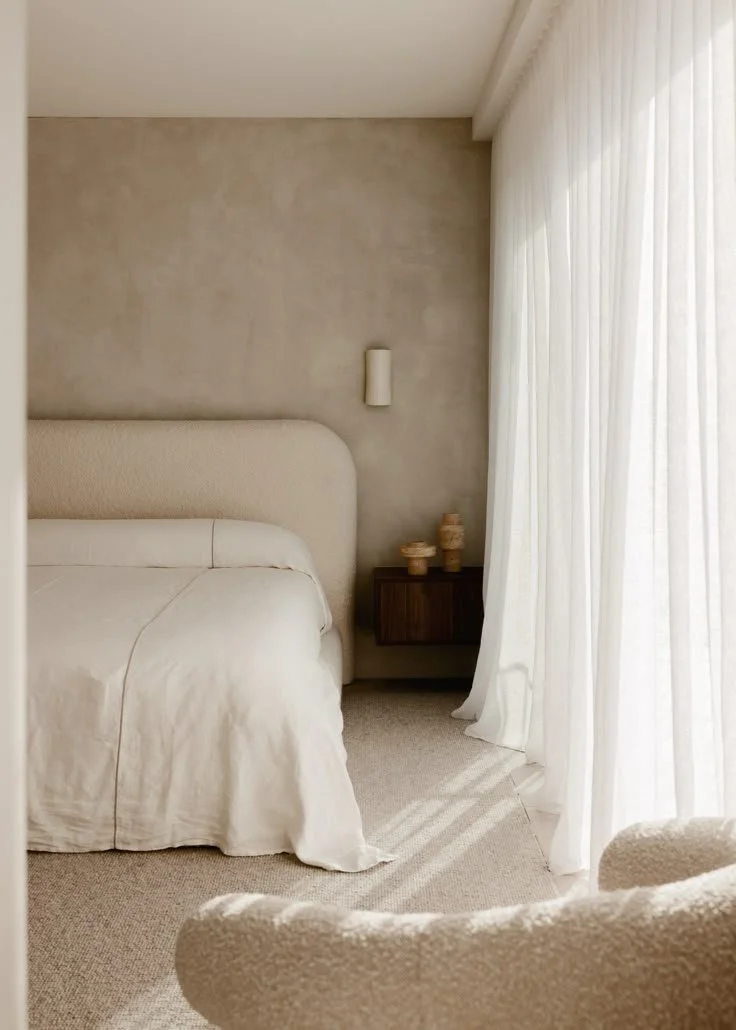
Image Credit: Aloca


4. CHOOSE CHARACTER OVER BRANDING
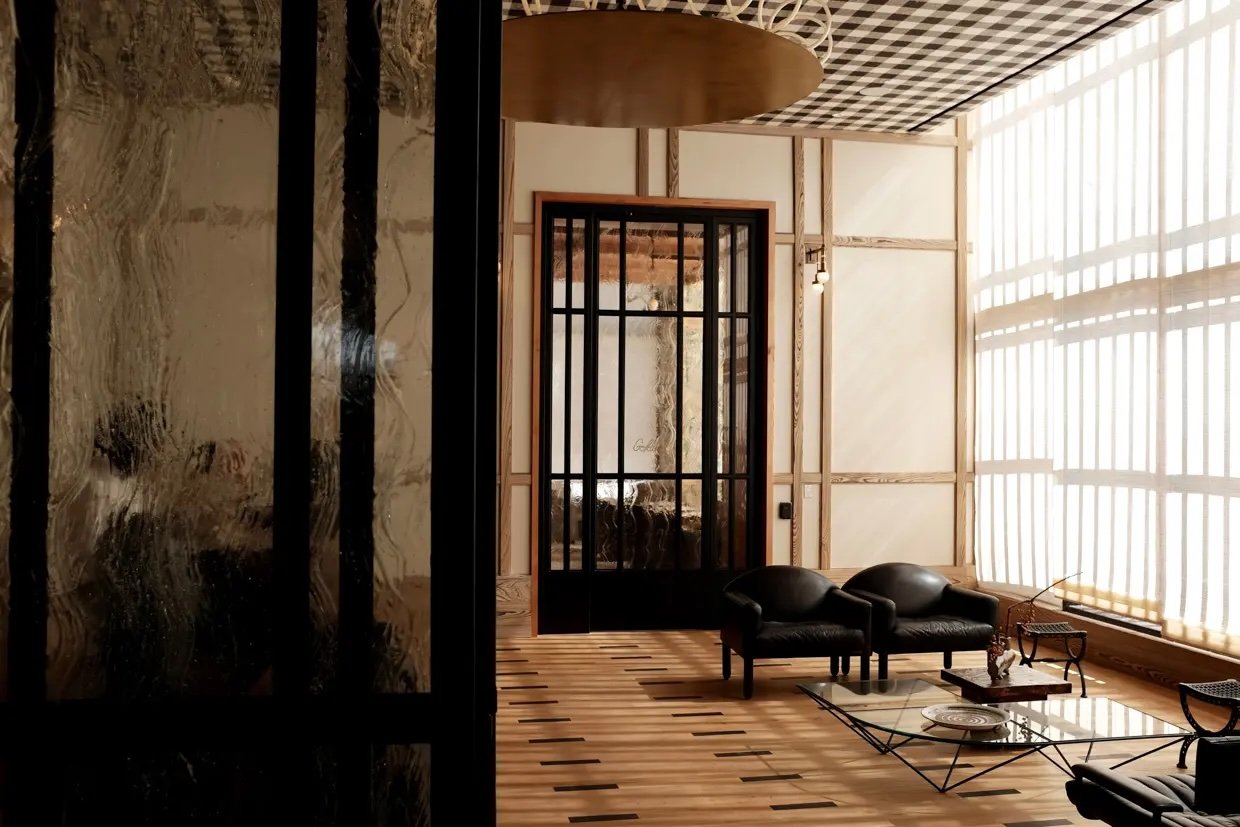
In quiet luxury design, identity is expressed through curation — not name recognition. Choose pieces with patina, story, or artisanal provenance. Vintage and handmade objects bring soul into streamlined spaces. That means opting for artisan-crafted objects, vintage finds, or bespoke built-ins — items that aren’t overexposed on Pinterest or associated with a particular brand moment.
Design: Kelly Wearstler, Image Credit: Proper Hotels
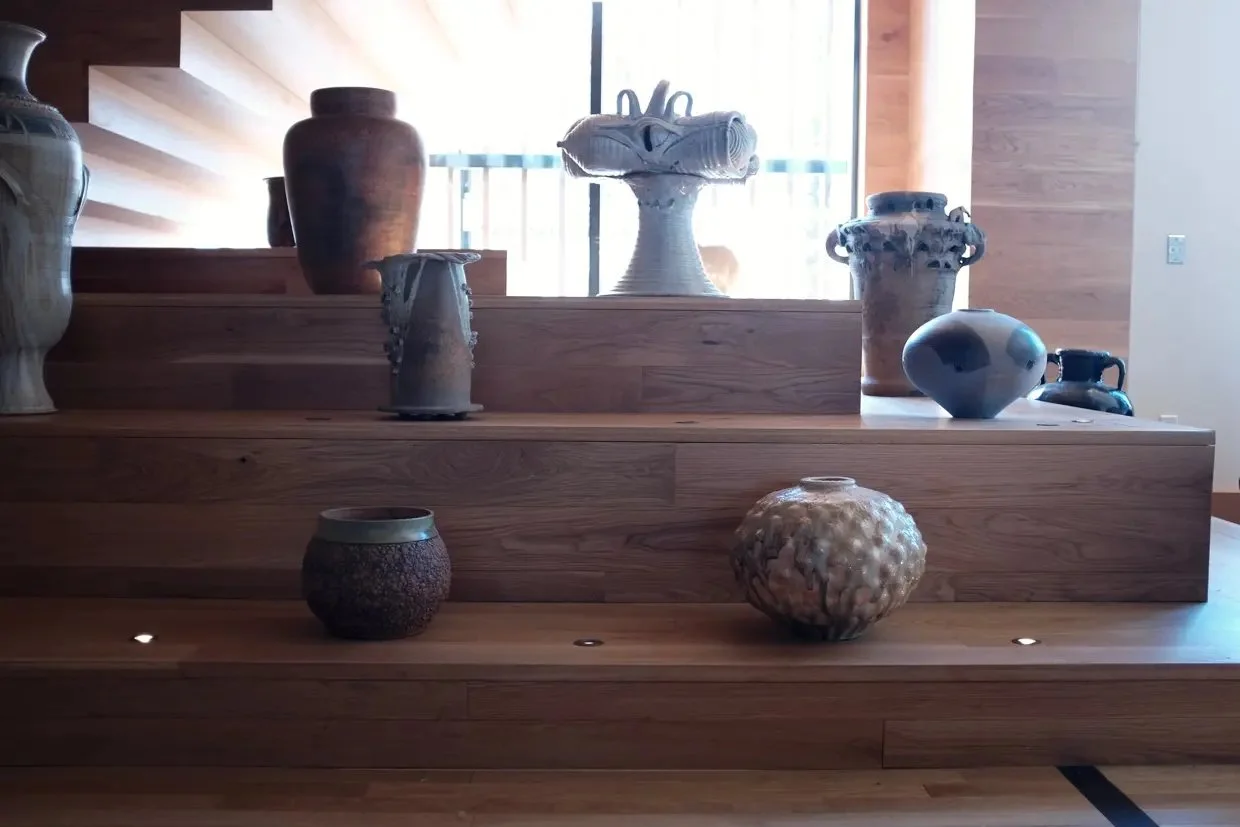
Design: Kelly Wearstler, Image Credit: Proper Hotels
Why It Works:
When spaces are pared back, every object matters more. A home becomes quietly luxurious when it reflects its inhabitants, not the algorithm. Unique, character-driven details add lasting value and feel less disposable.
How To Implement At Home:
Source vintage pieces from 1st Dibs, Chairish or local San Diego vendors to layer in history and one-of-a-kind form. A mid-century travertine plinth, for example, can be versatile and double as a pedestal or side table.
Incorporate functional lighting as art — like sculptural sconces or pendants from Allied Maker or Apparatus Studio to introduce shadowplay and visual rhythm.
Use wall niches or built-in ledges to display vintage vessels, plaster objects, or hand-thrown pottery from Nickey Kehoe in asymmetrical, spacious groupings. The Oblist is one of my personal favorites for unique finds.
Utilize local flea markets. For Southern California, explore The Rose Bowl Flea Market, Long Beach Antique Market, Topanga Vintage Market, Melrose Trading Post and Palm Springs has an endless supply of vintage.
Designer Tips:
1. Don’t over-style. In a quiet luxury home, a single bowl placed on a thick shelf, under a warm light source, can carry more impact than a fully accessorized bookcase.
2. Curate for longevity, not labels. Prioritize artisan-made or vintage pieces that bring depth through form and material, such as hand-thrown ceramics, oxidized bronze, or unlacquered hardware. These details quietly shape a room’s character without feeling trend-driven.
3. Balance character with clarity. A sculptural accent like a reclaimed wood stool or carved stone basin makes more impact when placed within a calm, architectural setting. Use negative space to frame meaningful pieces rather than filling every surface.
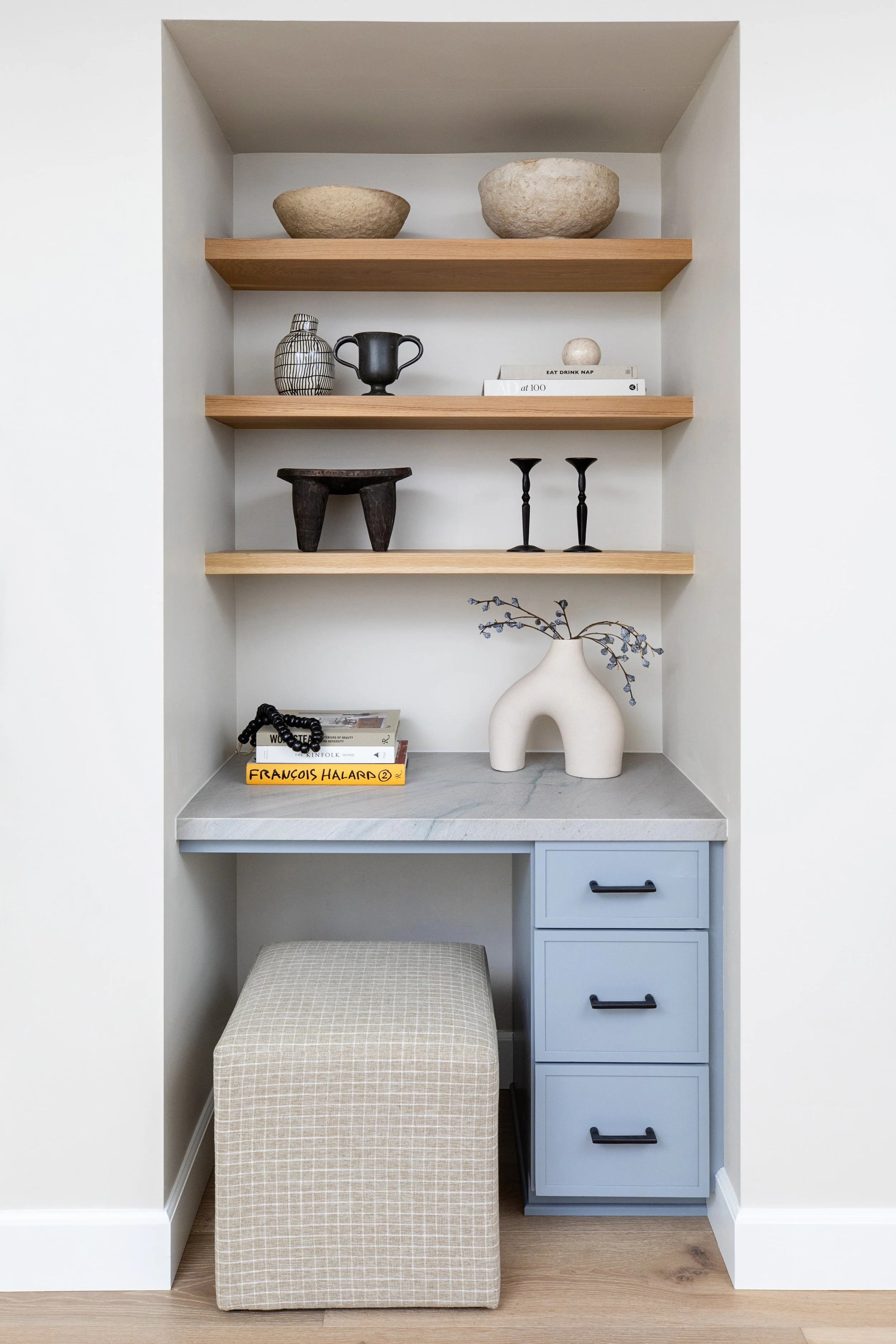
Design: Studio Henree, Photography: Jenny Siegwart
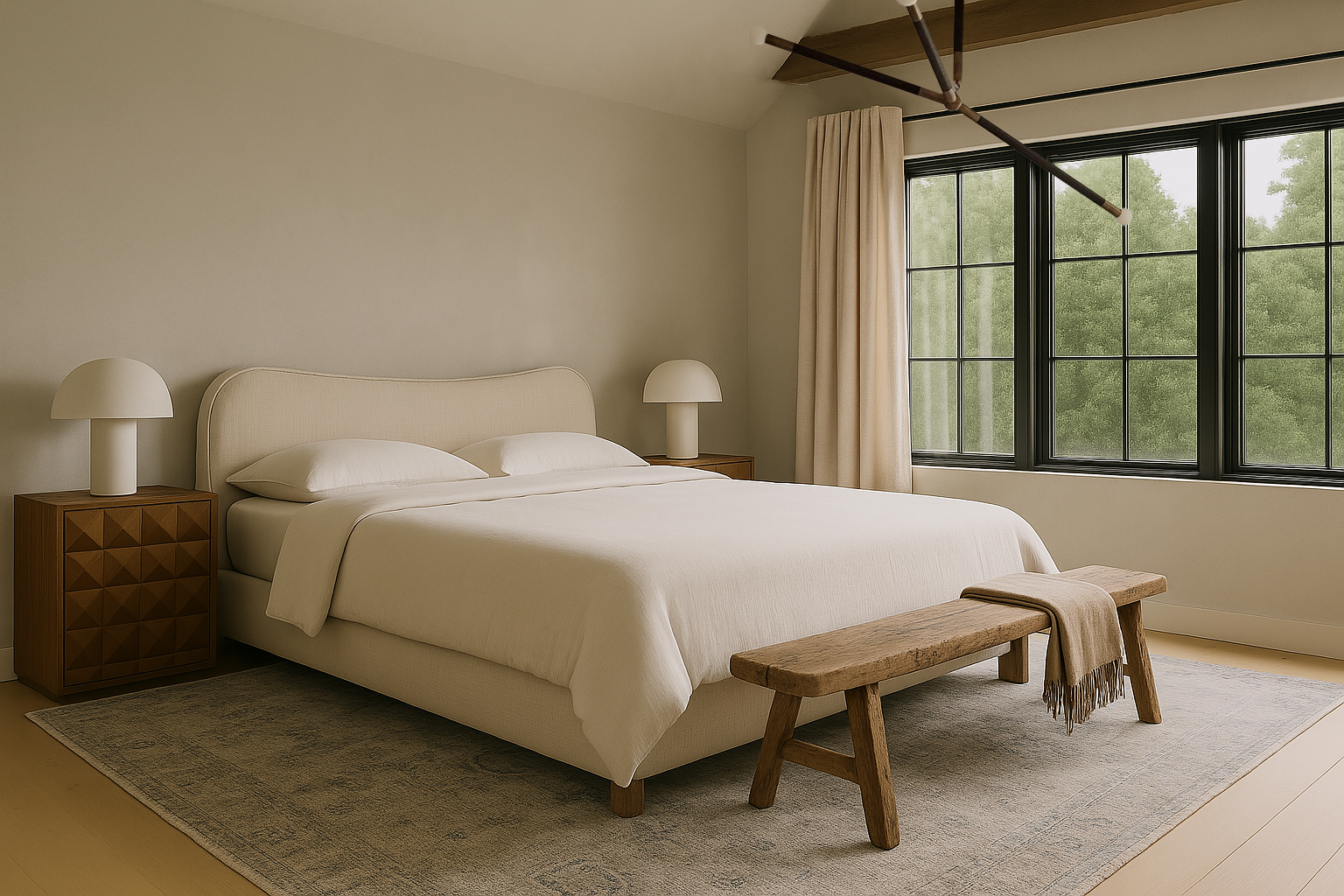
Design: Studio Henree
5. DESIGN FOR BREATHABILITY + LIGHT
The most successful quiet luxury homes aren’t just about the furniture, they’re about how a space moves and feels. Negative space, low visual clutter, and integrated storage allow materials to shine and daily life to flow more easily. These interiors are about letting materials and form speak for themselves. They feel generous, open, and edited.
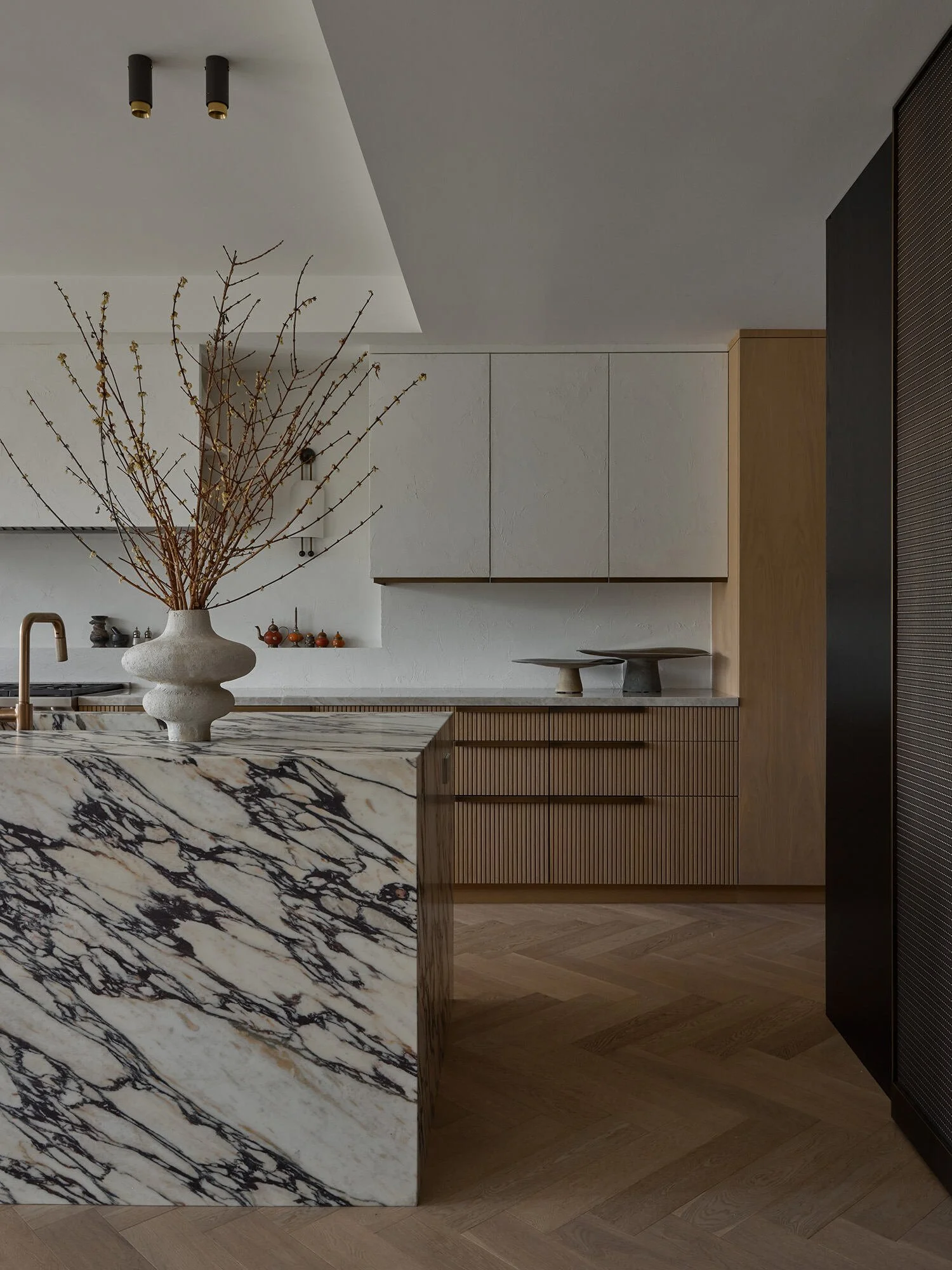
Design: MT Home, Photography: Lauren Miller
Why It Works:
Spatial clarity enhances flow. When materials and shapes are allowed to breathe, the home feels more expansive — even in smaller footprints. It also increases usability, especially in homes with a strong indoor-outdoor connection, like many in Southern California.
How To Implement At Home:
Use integrated millwork to reduce visual clutter. California Closets’ Custom Solutions can be tailored for entryways, bedrooms, or mudrooms in a way that blends with your architecture.
Replace bulky storage pieces with sculptural, dual-purpose items like the Ferm Living Insert Coffee Table, which combines layered display options with minimal form.
Add quiet depth to kitchens or bathrooms with well-considered hardware. Rejuvenation’s Ansel Pull, available in polished nickel, aged brass, or oil-rubbed bronze, brings timeless weight to millwork without overpowering the space. San Diego Hardware also offers a thoughtfully curated selection of classic and contemporary options. The Fleur Cabinet Pull introduces a sculptural, modern accent, while the Sorrento Cabinet Pull adds an organic softness that pairs beautifully with wood or stone finishes.
Designer Tip:
Leave at least one wall in each room free from furniture or art. Let texture — limewashed walls, natural plaster, or long, sheer curtains do the visual work instead.
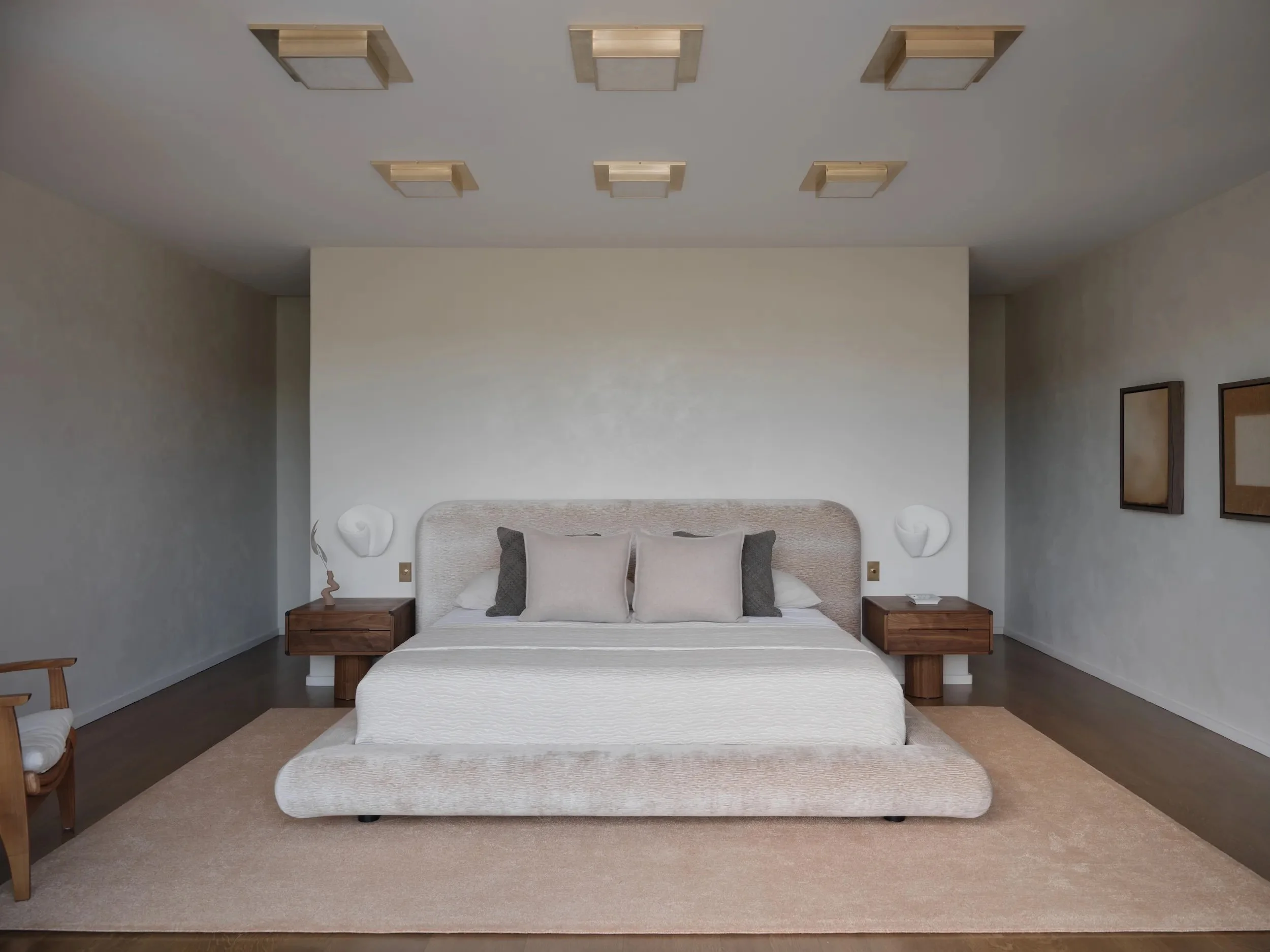
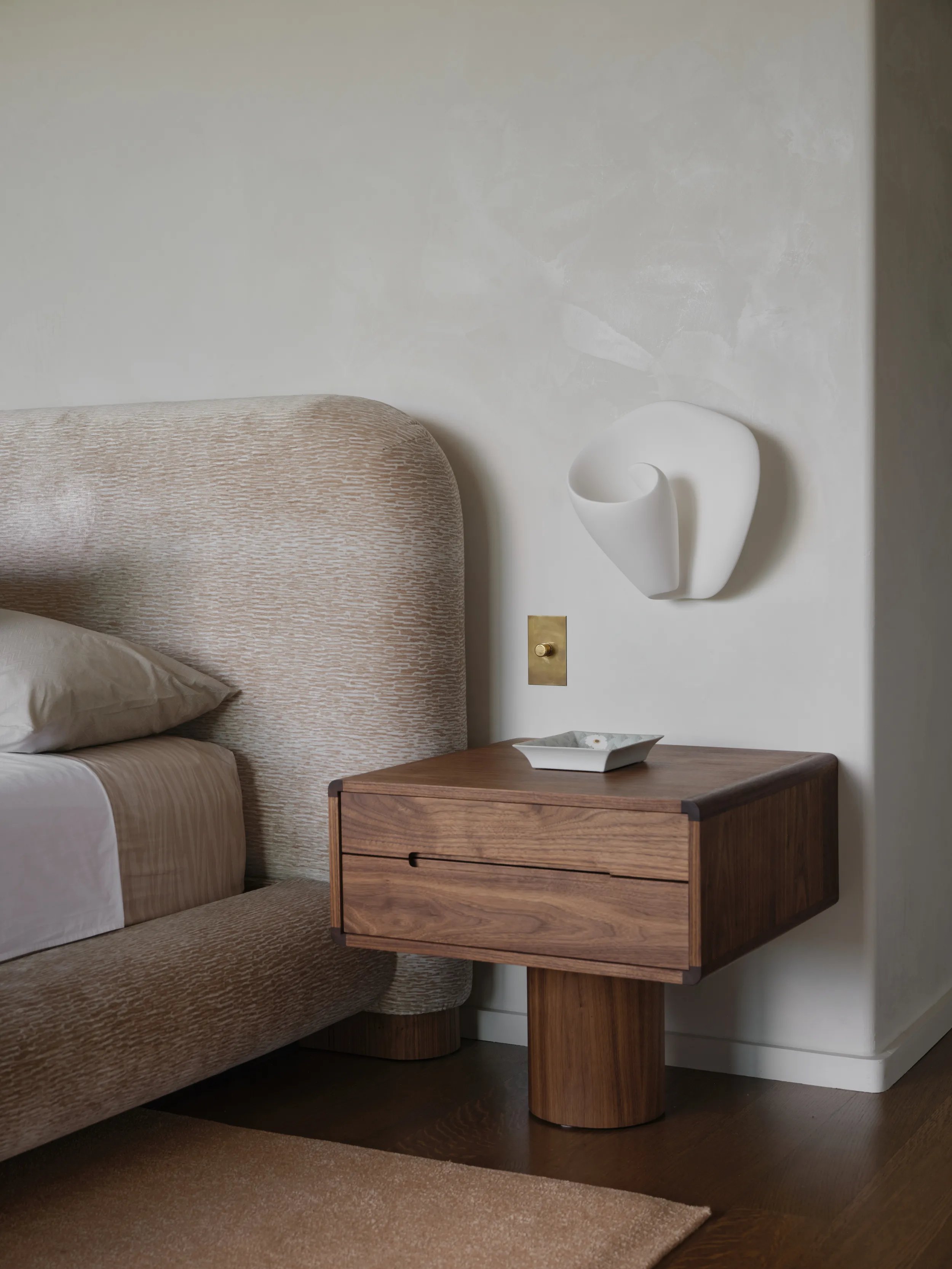
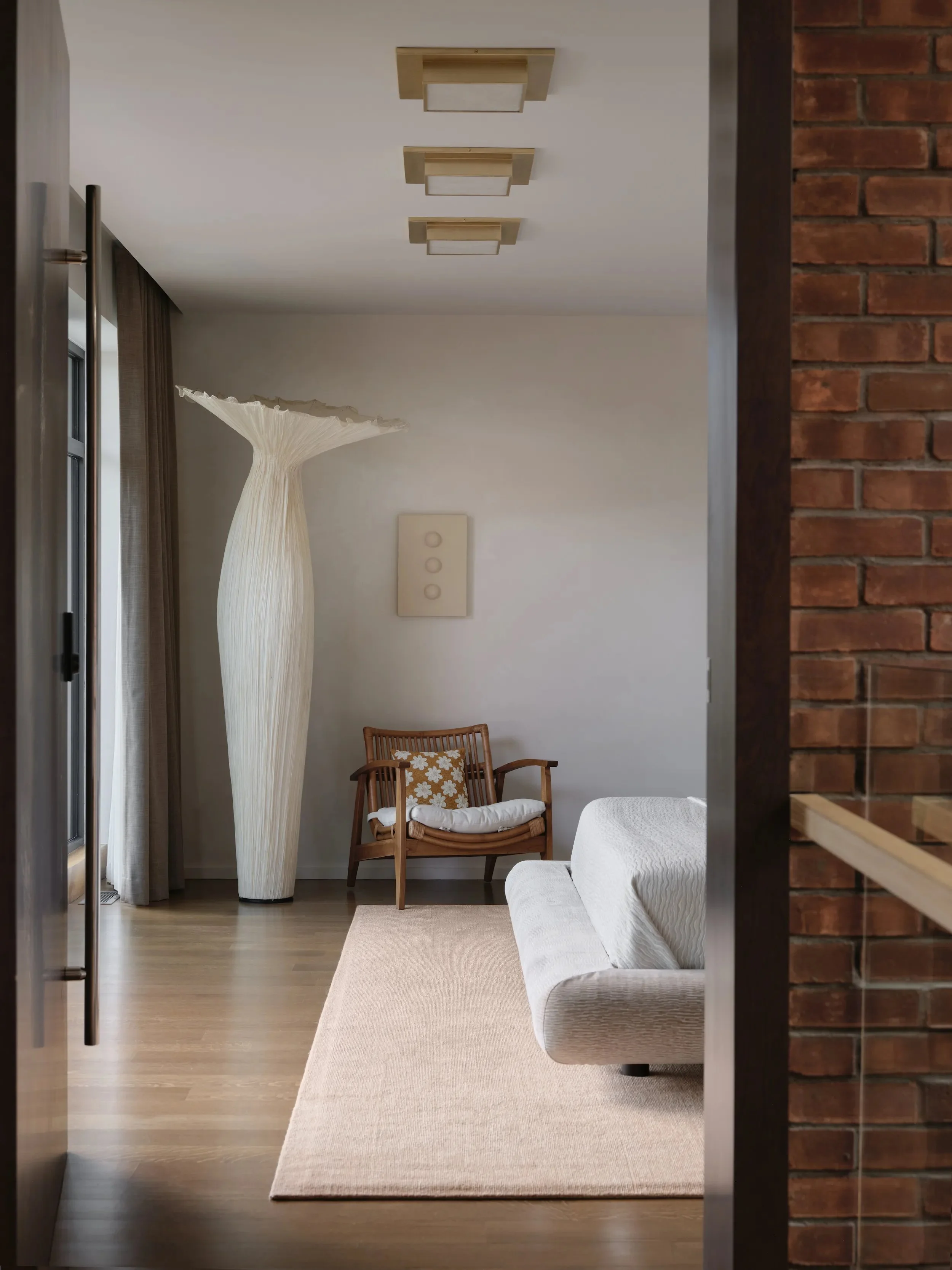
Design: FAM Design, Photography: Frederique Cloutier + Phil Bernard
Luxury is Simplicity —
On the West Coast, where the landscape does so much, interiors don’t need to compete — they need to connect. Quiet luxury isn’t about price point or trend, it’s about the quality of space, material, and experience.
It’s a choice to edit. To choose fewer, better things. And to create homes that aren’t just beautiful—but breathable, meaningful, and made to last.
Looking to create a timeless, curated home in San Diego?
Studio Henree specializes in full-service design rooted in texture, restraint, and timeless form.